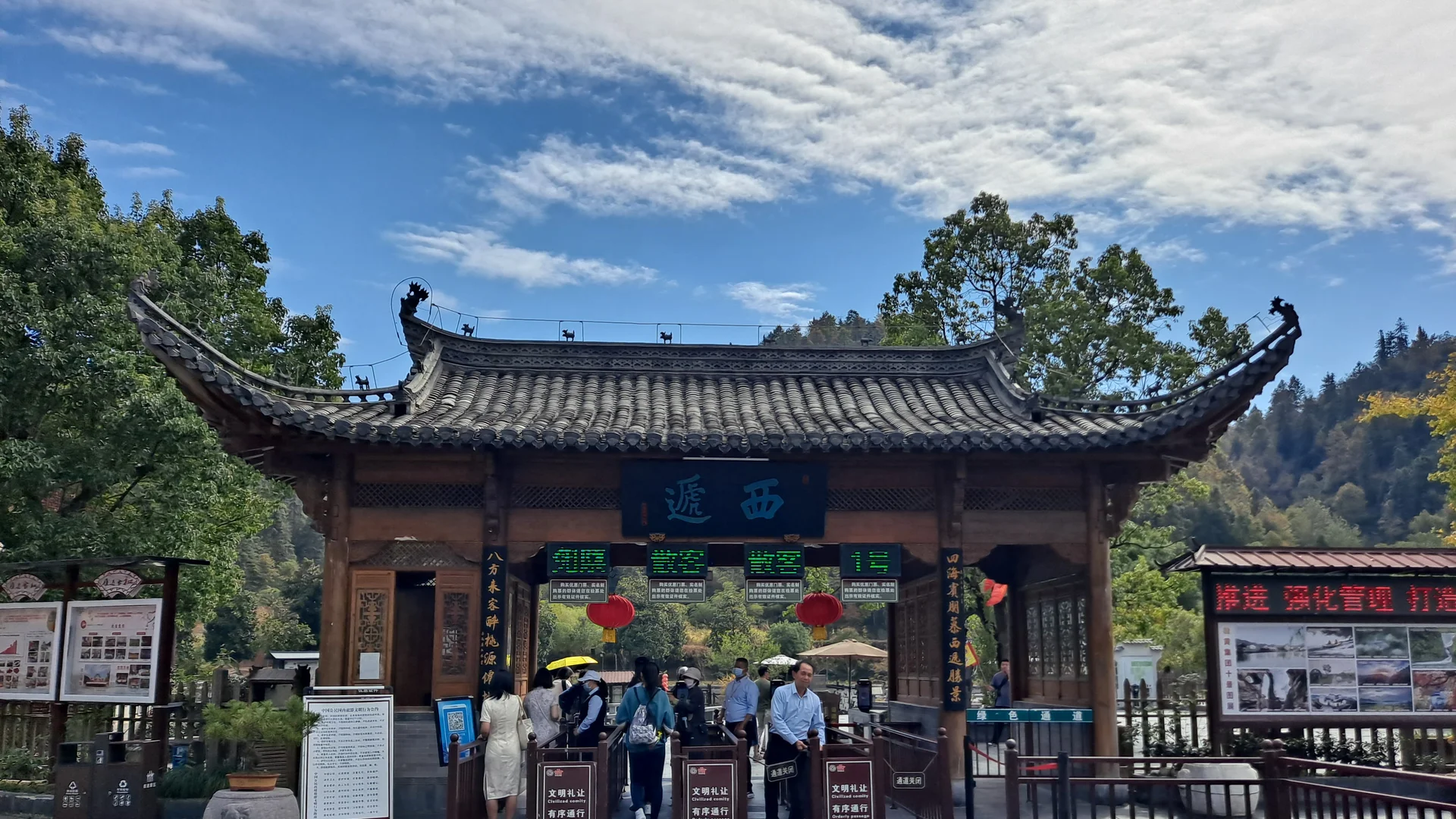
Quick facts
What to know before you go
Xidi — The Huizhou Village That Works Through Merchant Scale, Order, And White-Wall Calm is a curated China Hidden Gems destination in Anhui, selected for travelers who want the place, timing, effort, and logistics in one scan.
- Administrative location
- Xidi, Yixian, Huangshan, Anhui
- Chinese name
- 西递 · Xidi
- Best season
- March to May and September to November
- Difficulty
- Easy
- Time needed
- 2-4 hours
- Typical cost
- $
- Getting there
- Treat Xidi as a dedicated Huizhou village stop or a deliberate pair with Hongcun, rather than as an afterthought squeezed into a rushed loop.
Editorial briefing
Why this place works
A rights-safe guide to Xidi for travelers deciding whether this Huizhou merchant village deserves separate time from Hongcun, with practical notes on settlement texture, crowd pacing, and why Xidi works best through architectural order rather than through postcard comparison alone.
Why go
- A rights-safe guide to Xidi for travelers deciding whether this Huizhou merchant village deserves separate time from Hongcun, with practical notes on settlement texture, crowd pacing, and why Xidi works best through architectural order rather than through postcard comparison alone.
- Xidi — The Huizhou Village That Works Through Merchant Scale, Order, And White-Wall Calm gives travelers a concrete reason to plan around Yixian County, anhui, not just a generic first-trip city list.
- It is strongest for huizhou village, anhui, merchant architecture, with enough practical context to compare timing, difficulty, and onward route fit.
Turn this into a trip
Save Xidi — The Huizhou Village That Works Through Merchant Scale, Order, And White-Wall Calm, then plan around it.
Keep this gem on your device, open it in your bucket list, or start a planner draft with the destination already filled in.
Trip planning intake
Ask whether Xidi — The Huizhou Village That Works Through Merchant Scale, Order, And White-Wall Calm fits your route.
This is a lightweight planning signal, not an instant concierge. Leave your trip context and a real question, and the team can reply manually after review.
Story visuals
Xidi — The Huizhou Village That Works Through Merchant Scale, Order, And White-Wall Calm
The Huizhou Village That Gets Better Once You Stop Treating It As Hongcun's Shadow
Xidi often suffers from comparative viewing. Travelers who build an Anhui village day around Hongcun sometimes frame Xidi as the second stop, the backup stop, or the more optional stop. That framing weakens the place before the visit begins. Xidi is better understood on its own terms: not as a softer echo of another famous village, but as a Huizhou merchant settlement whose clarity comes from order, architectural density, and the disciplined rhythm of white walls, lanes, and ancestral houses.
That distinction matters because Huizhou villages can blur together when described lazily. White walls, dark tiles, carved wood, ancestral halls, and mountain-edge calm all start sounding interchangeable. A premium page should resist that. Xidi is stronger when presented as a village of merchant-house scale and settlement coherence. It is not only scenic. It is legible. The lanes, courtyards, walls, and house fronts keep explaining the social order that built them.
This is why Xidi still deserves space in Anhui even after Hongcun is already in the pool. Hongcun tends to dominate through water-image recognition and broad painterly fame. Xidi is tighter, more structural, and often more satisfying to travelers who care about village fabric rather than one iconic pond-and-bridge composition. That makes the two destinations complementary rather than redundant.
Why It Works
First, Xidi still reads clearly as a village rather than as a decorative heritage shell. That sounds obvious, but it matters. The site has enough architectural continuity that its lanes and courtyards continue to feel like a settlement logic rather than a scenic overlay placed for tourism consumption. This gives the stop more depth than a simple old-village photo circuit.
Second, the village's merchant-house character remains visible. Xidi is persuasive because it carries a certain scale of confidence. The built fabric is not merely quaint. It reflects wealth, clan memory, and the disciplined spatial values of Hui merchant culture. That difference gives the destination substance and helps it stand apart from more generalized ancient-town pages.
Third, Xidi rewards walking pace. Some destinations need a list of major nodes to stay coherent. Xidi can work through slower observation. Window patterns, wall height, lane turns, thresholds, and carved details keep the place alive. For travelers who enjoy architecture read at human scale, this is one of the village's main strengths.
A fourth reason it works is expectation control. Xidi does not need to promise sensory overload or theatrical spectacle. It is strong because it holds together. That quality can be more durable than louder destinations that rely on one dominant frame and little else.
How To Shape The Visit
Start by deciding whether Xidi is being visited as its own village or as part of an Anhui heritage pair. Either approach can work. But the page should say openly that Xidi performs best when it gets enough time to be read as a settlement rather than as a comparison exercise.
The second decision is timing. Xidi is much more vulnerable to crowd flattening than very large landscapes are. When visitor flow thickens, the village can become a corridor of bodies rather than a sequence of spatial ideas. Morning and lower-density windows usually give a much cleaner reading.
The third decision is how much detail attention you actually want to bring. Some travelers are happiest with a compact walk through the main structure of the village. Others want to slow down and notice house-scale distinctions, decorative elements, and lane patterns. The stronger visit usually leans toward the second mode, even if only slightly.
A fourth decision is how to manage Hongcun comparison. The worst route is visiting Xidi only to decide whether it wins or loses. The better route is asking what kind of Huizhou village experience you want. If the answer includes architectural order, merchant-house texture, and a slightly more controlled village rhythm, Xidi becomes easy to defend.
What To Prioritize
Prioritize settlement coherence. Xidi is persuasive when the traveler keeps noticing how lanes, walls, courtyards, and house fronts belong to one social-spatial system.
Prioritize walking pace too. The village loses some of its force when consumed at checklist speed.
It is also worth prioritizing architectural detail. Carvings, thresholds, and the scale of merchant homes help explain why the site matters beyond generic old-village charm.
A final priority is avoiding lazy comparison language. Xidi does not need to be sold as either better or worse than Hongcun. It is strong enough as its own Huizhou village page.
What Can Go Wrong
The first mistake is treating Xidi as a secondary stop with no attention budget of its own.
Another mistake is arriving at peak visitor density and then deciding the village itself lacks depth.
The third mistake is reducing the experience to one scenic-lane loop without letting the overall settlement order come into focus.
Who Should Save It
Save Xidi if you care about Huizhou architecture, merchant-village culture, slow settlement texture, and historic places that reveal themselves through structure rather than spectacle. It is especially good for travelers who want an Anhui destination with compositional discipline and real village logic.
It is weaker for travelers who only want one famous Anhui village and are happiest with the most painterly icon. Xidi is worth it when the traveler is willing to read architecture, lane rhythm, and social order, not only postcard charm.
What To Confirm Before You Go
Before finalizing the stop, decide whether Xidi is getting dedicated time or only pairing time, protect a lower-density visit window if you can, and be honest about whether you want a village of structure rather than scenic shorthand. The honest promise is simple: Xidi is rewarding when you treat it as a coherent Huizhou merchant settlement, not as a backup village after somewhere else.
Traveler actions
Save, check in, share, and help other travelers judge whether this place is worth the trip.
Traveler Comments
Share your Xidi — The Huizhou Village That Works Through Merchant Scale, Order, And White-Wall Calm experience
Continue exploring
More in anhui
View all → anhui
anhui Hongcun — The Hui Village That Turns Reflection Into Architecture
宏村 · Hongcun
A rights-safe guide to Hongcun for travelers deciding whether the village deserves a dedicated stop, with honest notes on South Lake, lane pacing, and why Hongcun works best when it is read as a designed settlement rather than a generic postcard.
- anhui
- March to May and September to November
- Easy
 anhui
anhui Huangshan (Yellow Mountain)
黄山 · Huangshan
The mountain that defined Chinese landscape painting — granite peaks piercing through a sea of clouds, ancient twisted pines, and hot springs at 1,800 meters.
- anhui
- Mar – May, Sep – Nov
- Moderate