
Quick facts
What to know before you go
Shangri-La — The Highland Base Where Old Town And Monastery Finally Make Sense Together is a curated China Hidden Gems destination in Yunnan, selected for travelers who want the place, timing, effort, and logistics in one scan.
- Administrative location
- Diqing, Yunnan
- Chinese name
- 香格里拉 · Shangri-La
- Best season
- May to October
- Difficulty
- Easy
- Time needed
- 1-2 days
- Typical cost
- $$
- Getting there
- Use Shangri-La as a highland base and split old-town walking from Songzanlin rather than forcing the stop into one rushed altitude day.
Editorial briefing
Why this place works
A rights-safe guide to Shangri-La for travelers deciding how to use Dukezong Old Town and Songzanlin Monastery as a real highland base, with practical notes on altitude, pacing, light, and why this stop works best when it slows the route down instead of pretending to be a fantasy slogan.
Why go
- A rights-safe guide to Shangri-La for travelers deciding how to use Dukezong Old Town and Songzanlin Monastery as a real highland base, with practical notes on altitude, pacing, light, and why this stop works best when it slows the route down instead of pretending to be a fantasy slogan.
- Shangri-La — The Highland Base Where Old Town And Monastery Finally Make Sense Together gives travelers a concrete reason to plan around Diqing, yunnan, not just a generic first-trip city list.
- It is strongest for highland town, old town, tibetan culture, with enough practical context to compare timing, difficulty, and onward route fit.
Turn this into a trip
Save Shangri-La — The Highland Base Where Old Town And Monastery Finally Make Sense Together, then plan around it.
Keep this gem on your device, open it in your bucket list, or start a planner draft with the destination already filled in.
Trip planning intake
Ask whether Shangri-La — The Highland Base Where Old Town And Monastery Finally Make Sense Together fits your route.
This is a lightweight planning signal, not an instant concierge. Leave your trip context and a real question, and the team can reply manually after review.
Story visuals
Shangri-La — The Highland Base Where Old Town And Monastery Finally Make Sense Together
The Highland Base That Works Better Than The Branding
Shangri-La is easy to dismiss because the name itself feels like a tourism invention. It promises paradise before the traveler has seen a lane, a roofline, or a single stretch of mountain light. That is exactly why the page needs discipline. The useful version of Shangri-La is not a fantasy slogan. It is a highland base in northwest Yunnan where Dukezong Old Town, Songzanlin Monastery, altitude, and route pacing come together into one of the most legible slow stops in inland China.
When treated this way, the destination becomes more interesting. Dukezong gives the visit urban texture rather than postcard emptiness. Prayer wheels, timber facades, rooftop layers, and broad squares are part of it, but so are guesthouse streets, morning light, and the feeling that this is a place to settle into a pace. Songzanlin, meanwhile, gives the stop scale. It turns the page from old-town wandering into a real highland route with spiritual and architectural weight.
Why It Works
First, Shangri-La changes the emotional temperature of a Yunnan route. Lijiang, Dali, and Kunming each have their own logic, but Shangri-La is where the trip starts to feel elevated in both altitude and atmosphere. Air, light, and street rhythm all shift. That matters for travelers who want northwest Yunnan to feel different rather than merely farther.
Second, it works because the destination is not one single attraction. A serious page does not need to pretend Dukezong alone can carry a full stop, and it does not need to sprawl into every plateau sight nearby. The win is the combination: old town as walking base, monastery as anchor, and city edge as the place where the plateau begins to read clearly.
Third, Shangri-La rewards slower planning. The traveler who arrives, drops bags, and lets the first afternoon be about pace usually gets more out of the stop than the traveler who treats it as a checklist between transport legs. That pacing is part of the premium value. The page should help the user understand that highland destinations become thinner when every hour is forced.
How To Shape The Visit
Start by deciding whether Shangri-La is a transit break or a two-day base. A transit break can still work, but the strongest version of the destination is at least one night with one calm old-town walk and one dedicated half-day or day for Songzanlin and the city edge. That gives the page a believable rhythm.
On arrival, protect the first hours. Even travelers who handle altitude well often feel the difference in pace, hydration, and sun exposure. Shangri-La does not require drama about altitude, but it does require respect. A first afternoon in Dukezong is a better move than landing and immediately turning the day into transport plus monument plus long drive.
The next decision is whether to build the stop inward or outward. Inward means staying focused on Dukezong, rooftop views, monastery scale, and the feel of the urban base. Outward means using Shangri-La as a launch point for bigger northwest Yunnan routes. For this page, inward is the right editorial center. It gives the traveler a destination they can actually use without overpromising an entire prefecture.
Songzanlin should be framed as the weight-bearing companion to Dukezong, not as a side note. It gives the stop the architectural and spiritual scale that old-town wandering alone cannot provide. At the same time, the guide should resist flattening the monastery into a scenic prop. The point is not to consume it as another view platform. The point is to understand how monastery, town, and plateau edge hold together as one highland base.
What To Prioritize
Prioritize coherence over mileage. One strong old-town walk, one monastery block, and time to let the city breathe is better than cramming in every possible scenic detour. Shangri-La gets weaker when it becomes an anxious race to prove you made it far into Yunnan.
The page should also prioritize dayparting. Early and late light are particularly useful here because rooftops, hills, and monastery facades gain texture when the light is angled. Midday can still work, but the highland sun is harsher and the stop feels flatter if every important moment is pushed into one bright window.
It is also worth prioritizing honesty about branding. Some travelers arrive expecting the name Shangri-La to guarantee transcendence. That is not how good routes work. The destination succeeds because it combines a real old town, a major monastery, and a highland pace that reorients the trip. The page should say that clearly and let the traveler discover the rest on the ground.
Who Should Save It
Save Shangri-La if you want northwest Yunnan to feel materially different from the lower-altitude tourist circuit, and if you like destinations where atmosphere comes from pace as much as from landmarks. It is especially strong for travelers interested in Tibetan-influenced urban texture, monastery architecture, highland light, and route design that benefits from slowing down.
It is weaker for travelers who only want one quick photo stop before moving on, or who expect the name itself to do the work. Shangri-La rewards patience, hydration, and a willingness to use the town as a base rather than as a branded trophy.
What To Confirm Before You Go
Before locking the route, confirm current transport timing into Shangri-La, monastery opening conditions, weather, and how much altitude margin your wider itinerary allows. Also decide whether this stop exists to rest and recalibrate the trip or to launch a deeper northwest Yunnan route. That choice determines whether Shangri-La feels thin or indispensable.
How To Use This Page In The Tools
Shangri-La should hand off to planning as a pace-and-base question: build one highland stop around Dukezong Old Town and Songzanlin Monastery, with enough time for altitude adaptation and a realistic split between old-town walking and monastery scale.
Traveler actions
Save, check in, share, and help other travelers judge whether this place is worth the trip.
Traveler Comments
Share your Shangri-La — The Highland Base Where Old Town And Monastery Finally Make Sense Together experience
Continue exploring
More in yunnan
View all → yunnan
 Yuanyang Rice Terraces — The Living Hani Landscape That Works Through Light, Water, And Village Continuity
元阳梯田 · Yuanyang Titian
A rights-safe guide to Yuanyang Rice Terraces for travelers deciding whether this Hani cultural landscape deserves a dedicated Yunnan detour, with practical notes on season, viewpoint discipline, and why Yuanyang works best as a living terrace system rather than a one-shot sunrise hunt.
- yunnan
- December to March
- Easy
 yunnan
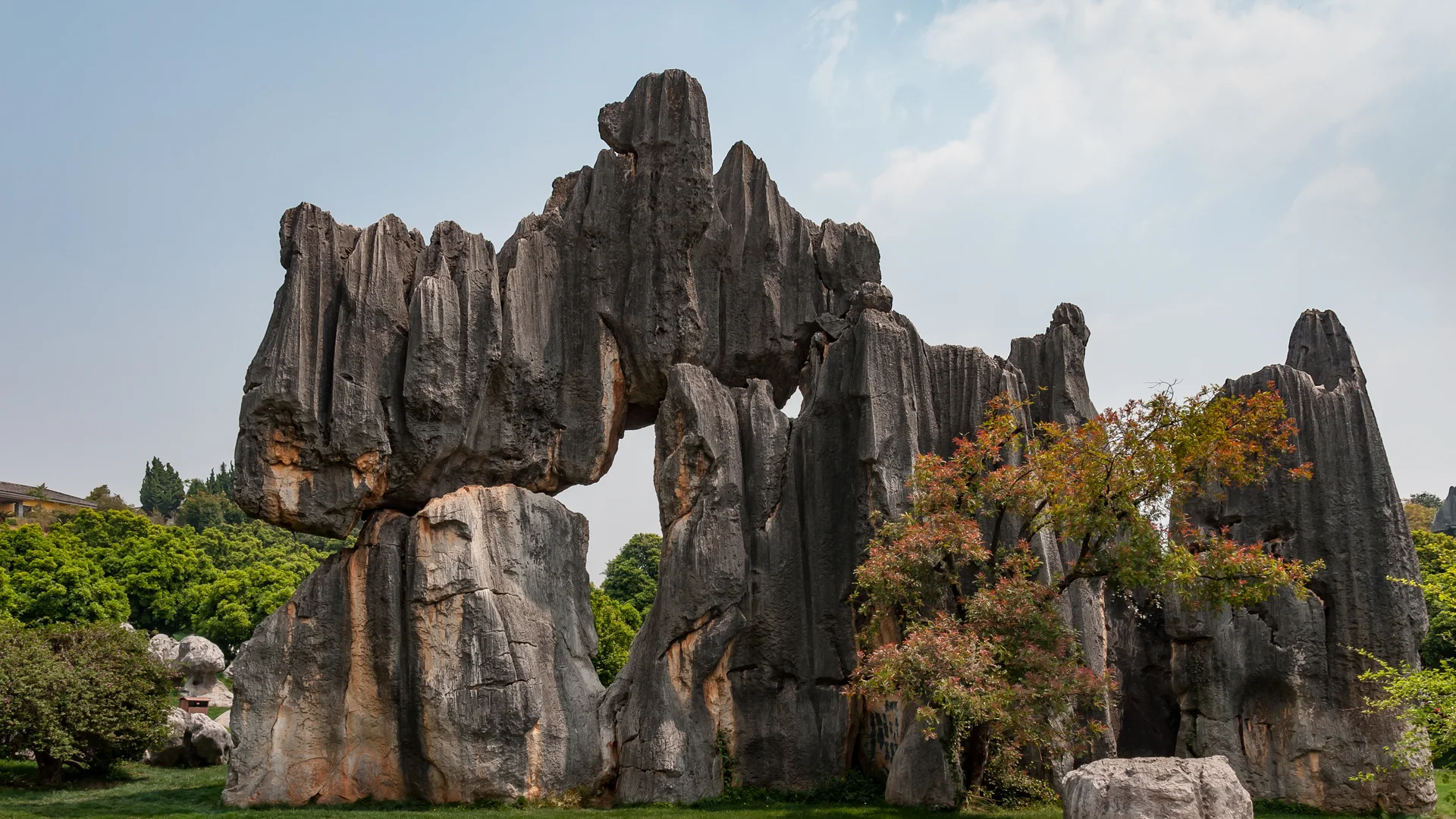
 Stone Forest — The Yunnan Karst Maze That Works Through Geometry, Not Lush Scenery
石林 · Shilin
A rights-safe guide to Stone Forest for travelers deciding whether this Yunnan world-heritage karst stop deserves a separate trip, with practical notes on route reading, shape recognition, and why the site works best as a stone-geometry landscape rather than as a generic scenic park.
- yunnan
- March to May and September to November
- Easy
 yunnan
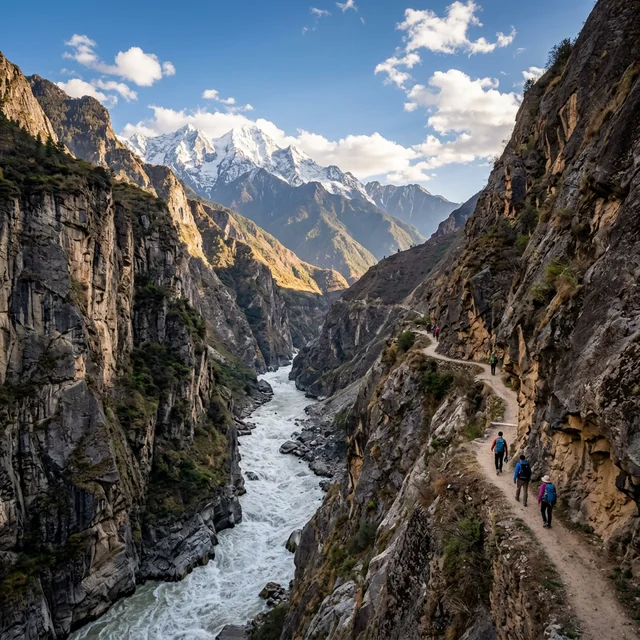
 Tiger Leaping Gorge
虎跳峡 · Hutiaoxia
One of the deepest gorges on Earth, where the Yangtze River squeezes through a gap narrow enough for a tiger to leap across. A 2-day trek with 2,000-meter cliff walls.
- yunnan
- May – Jun, Sep – Nov
- Challenging